Midsummer in Bergen: How Norwegians celebrate St. Hans and Jonsok
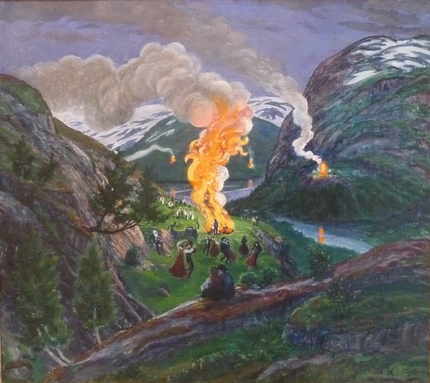
On the evening of 23 June, thousands of people all over Norway gather around bonfires to celebrate the longest day of the year. St. Hans, also called Jonsok, is one of the most atmospheric evenings of the Norwegian year.
- Date: 23 June
- Norwegian names: St. Hans, Jonsok
- Main tradition: Bonfires
- Typical food: Barbecue, hot dogs, rømmegrøt
- Best place in Bergen: Laksevåg bonfire
St. Hans, also known as Jonsok, is Norway's midsummer celebration, held every year on 23 June. Celebrations take place outdoors and are open to everyone. If you're studying in Bergen, you shouldn’t miss this traditional Norwegian summer event.
What is Jonsok or St. Hansaften?
Jonsok is the Western Norwegian word for the midsummer celebration at summer solstice on 23 June, equivalent to St. Hans used elsewhere in the country.
Although the traditions have roots in pre-Christian midsummer celebrations, the name comes from Saint John the Baptist, whose birthday is celebrated on 24 June.
When is midsummer celebrated in Norway?
In Norway, midsummer celebrations are traditionally held on the evening of 23 June.
Unlike Sweden and Finland, where midsummer celebrations are usually held on the nearest weekend, Norwegians normally celebrate on the actual date every year.
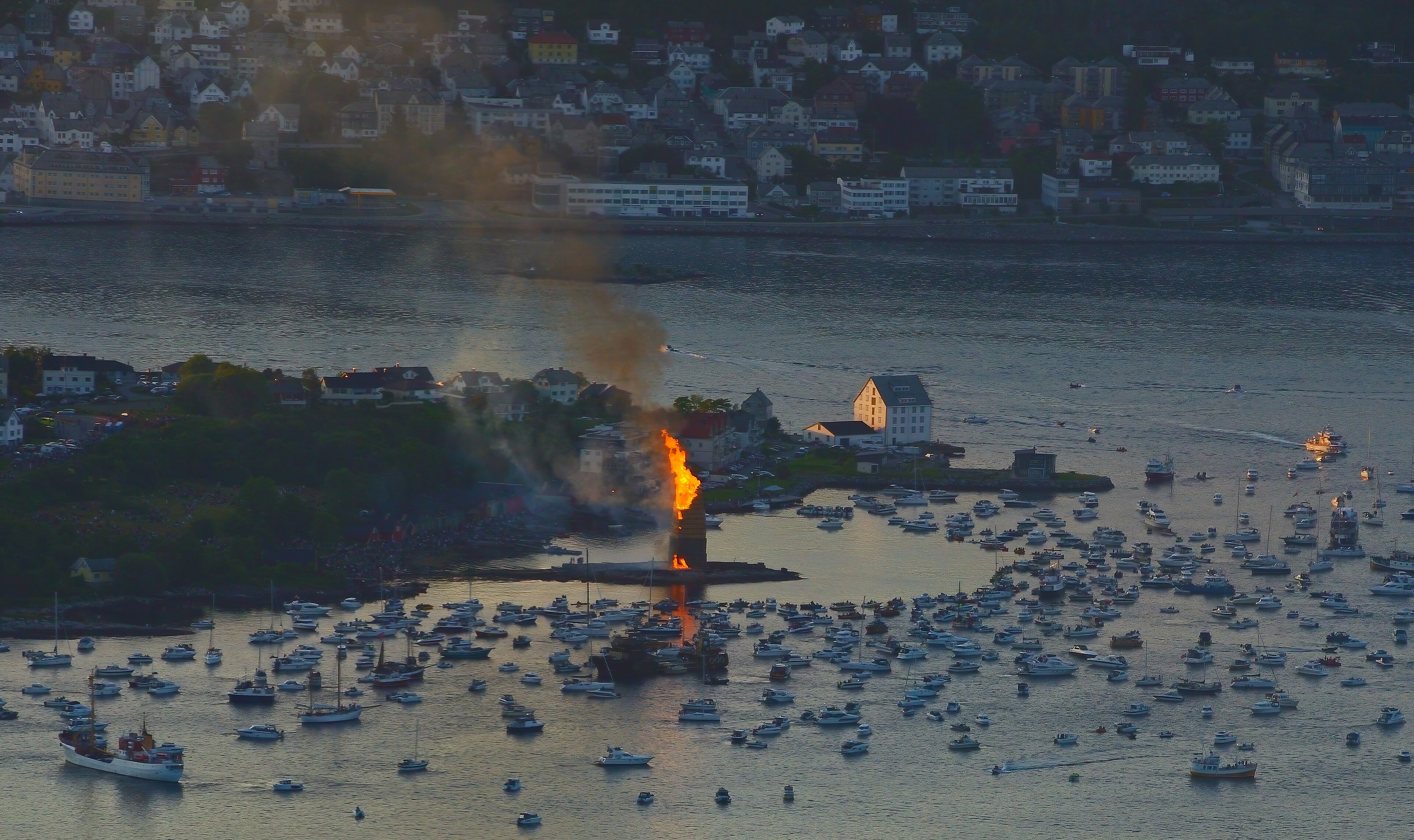
The midsummer bonfire in Ålesund, Norway. Kaushik jayasayee, CC BY-SA 4.0 <https://creativecommons.org/licenses/by-sa/4.0>, via Wikimedia Commons
What happens during a St. Hans celebration?
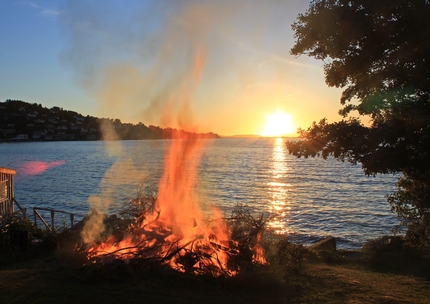
Gathering around a bonfire, often by the sea or a lake, is the most important part of the celebration. For teenagers and young people St. Hans is an excellent opportunity for having a party, and especially if you are too young to get into night clubs...
Most bonfires are quite large, while some are enormous. In Ålesund, teenagers spend weeks building a giant bonfire, aiming to surpass the previous year's structure. The current record was set in 2016, when the bonfire reached 47.4 metres (at the time an official world record).
Other common activities include:
- Games and competitions for children
- Live music
- Socialising with friends and family
- Food and drinks outdoors
In some parts of Western Norway, a mock wedding has traditionally been part of the festivities, with children dressing up as a bride and groom.
It is believed that all sorts of plants gain magical abilities during that night. According to folklore, unmarried girls could pick seven different flowers on midsummer night and place them under their pillow. If they did, they would dream of their future husband. Some places also had a tradition to decorate the house with flowers to protect it from evil forces.
What do people eat and drink at St. Hans?
Barbecues, and especially hot dogs, are the most common thing to eat at St. Hans celebrations. People bring their own food and enjoy a picnic with friends and family.
Another traditional midsummer dish is rømmegrøt (a thick, buttery sour cream porridge), served with sugar, cinnamon and cured meats.
It is common to party and drink alcohol at St. Hans. But at some of the more family-oriented events alcohol plays a less important role.
What should you wear?
If the weather is nice, most people wear casual summer clothes.
However, Bergen's weather can be unpredictable, even in late June. It is often a good idea to bring a warm jacket and waterproof clothing, especially if you plan to stay outside for several hours.
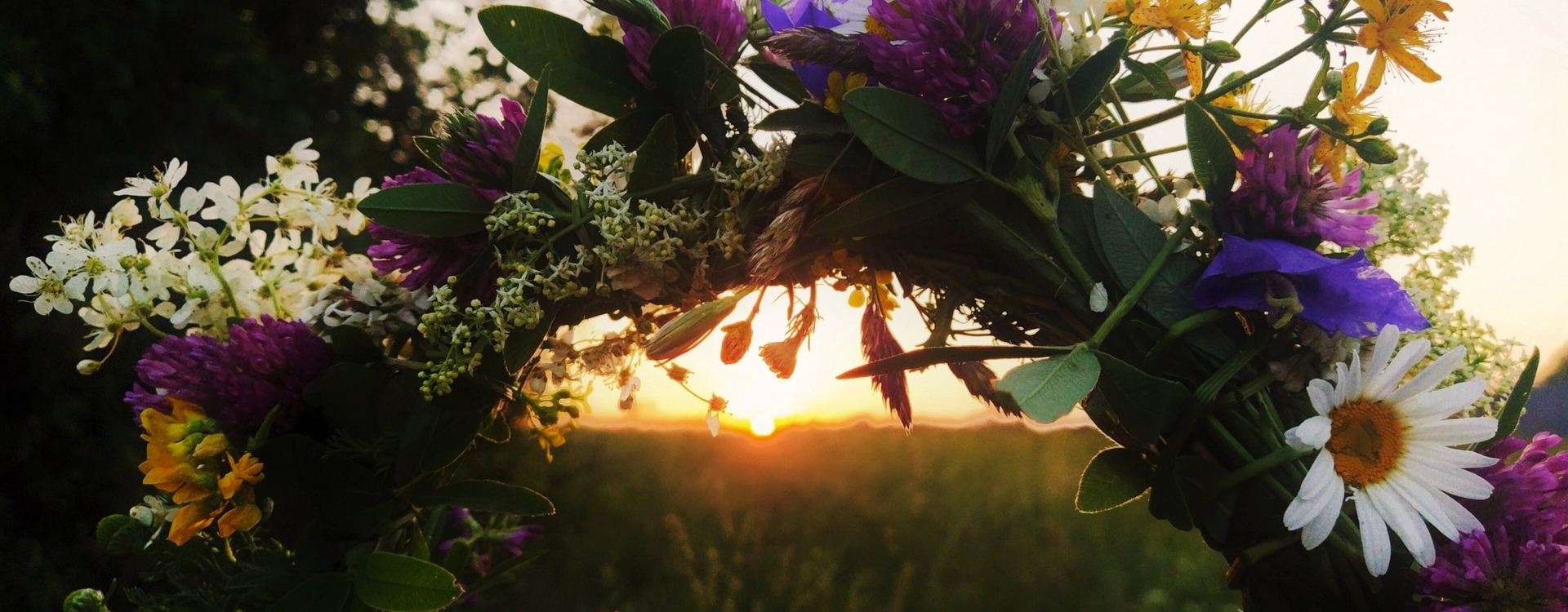
You can also make your own flower wreath from wildflowers.
Where can you experience St. Hans in Bergen?
There are several opportunities to join St. Hans celebrations in Bergen.
The largest public celebration is held in Laksevåg, featuring Bergen's biggest bonfire, “Tønnebålet på Laksevåg”. This family event includes games for children, music and a raffle. Unlike most Norwegian midsummer celebrations, it is often held on the Saturday closest to 23 June.
Old Bergen Museum also frequently hosts St. Hans events. You will need an admission ticket for this event.
Smaller celebrations are often organised by local neighbourhood associations, including Møhlenpris Velforening, Øvsttun Velforening, Sydnes Velforening and Bergendal Gård. These events are normally free and open to everyone.
Check local Facebook groups and event listings to find events near where you live.
How to join the Jonsok celebration?
Just come as you are! You don’t need an invitation and everybody is welcome. Take your own food and drink with you, preferably things you can grill at the bonfire. At the event at Laksevåg in Bergen you can usually buy sausages, barbecue food, pastry and soda.
Why do Norwegians light bonfires?
For people living in pre-Christian times, the summer solstice marked an important turning point in the year. According to folklore, supernatural beings and evil forces were especially active during midsummer night, and bonfires were believed to protect people and livestock.
Over time, these older traditions merged with the Christian celebration of Saint John the Baptist.
Experience the Norwegian midsummer traditions
For international students in Bergen, St. Hans is an easily accessible cultural event. The celebrations are open to everyone, usually take place outdoors, and require no special knowledge of Norwegian culture. Just join the crowd, enjoy the atmosphere and experience a Norwegian summer evening at its best.
Is St. Hans like Swedish midsummer?
| Norway | Sweden |
|---|---|
| Bonfires are central | Maypole is central |
| Celebrated 23 June | Celebrated on nearest weekend |
| More informal | More traditional dress and dancing |
Questions about St. Hans in Norway
Yes, everyone is welcome to join the St. Hans celebrations! Most of the events are free of charge but you should bring your own food. The biggest celebration at Laksevåg is ticketed and you can buy food at the venue.
Take some food you would like to grill and a drink of your choice.
St. Hans is not a public holiday in Norway.